Currently Empty: ₨ 0.00
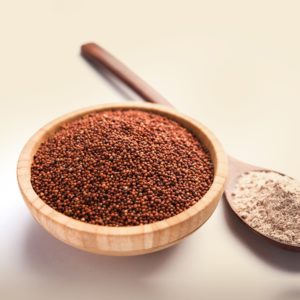
Finger Millet (Kodo) – A Nutritious Himalayan Grain with a Traditional Recipe
Finger millet, locally known as Kodo, is one of Nepal’s most valuable raithane (indigenous) grains, widely grown in the mid-hills and Himalayan regions. It is a climate-resilient crop that thrives with minimal water and without heavy chemical inputs, making it an important food for both nutrition and sustainability.
Finger millet is exceptionally rich in calcium, iron, dietary fiber, and essential amino acids. It supports strong bones and teeth, improves digestion, helps regulate blood sugar levels, and provides long-lasting energy. Because it is gluten-free and easy to digest, finger millet is suitable for people of all ages, including children and the elderly.
Traditional Finger Millet Dhido Recipe
Ingredients:
- 1 cup finger millet flour
- 3 cups water
- A pinch of salt (optional)
- Ghee (optional)
Method:
- Boil water in a pot and add salt if using.
- Reduce heat and slowly add finger millet flour while stirring continuously to avoid lumps.
- Stir with a wooden spatula until the mixture thickens and forms a smooth, firm consistency.
- Cover and cook on low heat for 5–7 minutes, stirring occasionally.
- Serve hot with a drizzle of ghee if desired.
Serving Suggestion:
Finger millet dhido pairs perfectly with saag, gundruk, local lentils, or fermented pickles, offering a wholesome and traditional Himalayan meal.
Finger millet is more than a grain—it is a symbol of healthy living, food security, and traditional wisdom. Including finger millet in your diet supports local farmers, preserves biodiversity, and nourishes your body naturally.